Showing posts with label Mental disabilities. Show all posts

Thursday, 8 December 2016

Special Needs Education video

Is Uganda doing enough to provide services for special needs education of its children with mental disabilities?

The poster says:
It will be difficult for Uganda to achieve her development goals on education if special needs education is not fixed. Experts warn that 60% of enrolled learners with special needs drop out of school each year, because their needs are not catered for.
It is for this reason that Cheshire Uganda and other stakeholders are engaging Inspectors of Schools to enhance adaptation to inclusive education with special attention to special needs education.

Tuesday, 23 August 2016

Intellectual Disability Uganda

Intellectual disability (ID), also known as mental retardation is a general disorder of development of the brain, it manifests in diminished intellectual and adaptive functioning. It is defined as an intelligence quotient (IQ) of less than 70 and additionally deficits in 2 or more adaptive behaviors for daily living. ID was once focused on intellectual ability, it now focuses on ability to interact in daily life. This means that a person with a low IQ may not be considered intellectually disabled. Wikipedia continues with the following insight:
The terms used for this condition are subject to a process called the euphemism treadmill. This means that whatever term is chosen for this condition, it eventually becomes perceived as an insult. The terms mental retardation and mentally retarded were invented in the middle of the 20th century to replace the previous set of terms, which were deemed to have become offensive. By the end of the 20th century, these terms themselves have come to be widely seen as disparaging, politically incorrect, and in need of replacement. The term intellectual disability is now preferred by most advocates and researchers in most English-speaking countries. As of 2015, the term "mental retardation" is still used by the World Health Organization in the ICD-10 codes, which have a section titled "Mental Retardation" (codes F70–F79). In the next revision, the ICD-11 is expected to replace the term mental retardation with either intellectual disability or intellectual developmental disorder, which the DSM-5 already uses. Because of its specificity and lack of confusion with other conditions, the term "mental retardation" is still sometimes used in professional medical settings around the world, such as formal scientific research and health insurance paperwork.
ID affects 2–3% of the world population, 75-90% of those affected people have mild ID.

We do not need sympathy.
All we need is opportunity.
People with IDs face many problems. The shortage of accurate data about numbers is unsurprising. In the 2009 paper Perspectives of intellectual disability in Africa: epidemiology and policy services for children and adults the author seeks to establish the reasons for this lack of information. The following points are summarized:
  • There is a paucity of data about ID in African countries because of the shortage of trained psychiatrists, often less than 1 per 1,000,000. 
  • Negative attitude to people with ID is pervasive
  • IDs cause a heavy financial burden taking up 10% of the mental health beds in hospitals in Nigeria.
  • HIV/AIDS complicates matters because many children with ID are orphans
  • Persons with IDs face prejudice and stigma from medical staff
  • The legal system is ill equipped to cope with individuals with IDs
The conclusions of the 2013 paper, Intellectual disability in Africa: implications for research and service development, are equally stark:
Although intellectual disability (ID) is probably the largest impairment grouping on the African continent, few indigenous research and evaluation studies have been undertaken.
The paper  continues:
People with ID are amongst the most marginalised groups globally. They experience social exclusion on a much greater scale than their able-bodied counterparts and this experience is intensified within contexts of poverty such as those on the African continent. Furthermore, even where services are available for persons with other impairments, ID is often neglected, in part due to a dearth of advocacy by and for them.
The paper ends summarizing the challenges that face people with IDs in the future:
The twenty-first century has seen world-wide economic, political and social changes. As respect for human rights grows within continental Africa, the economic growth of nations expand and their political systems become more democratic, then the future of disabled people should become more hopeful especially as the UN Convention of Rights of Persons with Disabilities has been ratified by many African states. However, determined efforts are needed to ensure that these citizens do indeed benefit but for this to happen the foundations for sustainable development need to be laid now. The identification of priority issues and the gathering of indigenous, evidence-based information are critical foundational steps.
Inclusion is a right not a special privaledge for a selected few

ID affects the whole family. What is it like to be the sister of someone with ID? This is the story of Rhona, written by her sister (Home Health The pain of raising a mentally retarded child):
Whatever happened to you, Rhona. Where did your words go? Why won’t you just be normal, like any other child? You see, sometimes I want to slap you. But then again I can’t. In your small world, perhaps, undressing and walking about naked is totally logical.
In your mind, maybe, you never understand that you should wear sanitary towels during your menstruation period. And yes, to you, it is just reasonable that the best defence you can put up is fighting when we try to force you to wear pads.
after all, you have this of incredible energy in your arms; I would never know how you got it.
These are only a few of the questions that run through my mind looking at my 20-year-old mentally retarded sister.
I feel an overwhelming sense of despair. You never know what else to do when you wake up and she has soiled her beddings. You just never know what to make of her, when you wake and she has thrown all the day’s meals in a trash can. You can never know what to do when she refuses to eat food for two days in a row; or when she refuses to wear sanitary towels and stains everything with blood.
Growing up, I never really understood why she was not talking or walking. While the rest of us played out and about, Rhona was always there — stuck in one place.
Perhaps it was that swelling that she was born with on the “soft part” of her head. At just about three months, she underwent an operation to have the swelling removed and it was successful.
She started walking at about six years of age. Talking was often with much difficulty so much that sometimes she had to bang her fist hard on the table for some words to come out. But at least she always managed to say something.
As she grew older, she seemed keen to go with us to school. But after a week of ridicule from her Primary One peers, she could not go on. In fact, we too were ridiculed as “siblings of the musilu”. Because she was slow in everything, other children laughed at her.
If she wet her underwear in class, word would spread from the pre-primary section to the P7 class.
Needless to say it was disheartening when everyone gathered to look at my “musilu” sister. I could have told them to mind their business or maybe explained that it was a condition that could happen to anyone. But as a 10-year-old, I often burst into tears. I could never understand why my sister was the way she was. Why, if the operation was successful, was she not growing normally?
I started dreading school because I never knew what to tell anyone who asked about Rhona. At lunch time, everyone gathered to look at how she fed like a baby; as she often smeared food all over her mouth. School just sucked.
My parents were later to overprotect Rhona. Dad tried to homeschool her. She had keen interest in crocheting and my mother was somewhat confident that since Rhona could not go to school, she would perhaps make a living out of crocheting.
Afraid of the bullying from the rest of the world, my parents jealously guarded Rhona so much that after their demise, we didn’t know where to exactly start. I don’t know if she is mourning or grieving in her own way, but Rhona has since deteriorated. The few words she used to say are no more. Her mannerisms have changed from the once calm girl to rough. She cannot bathe herself. She cannot take herself to the loo and she won’t feed herself. If it rains and we are not anywhere near to take her inside the house, be sure she will get drenched.
She unconsciously shakes her head all the time, laughs to herself all the time, as saliva sometimes flows freely. At some point you are afraid, her neck could break as a result of shaking it. She keeps scratching her face so much that it has now darkened yet she is light skinned.
She laughs to herself without reason. Some mornings when you think she has woken up in high spirits, she won’t accept to wear anything. If she does, she will remove it in a couple of minutes and soak it right away; or at least soak all her dresses and stay naked with all her breasts out.
You want to bury your head in the sand if you have visitors and she shows up in the sitting room naked. Sometimes she gets up and throws out everything you have in the house; from the utensils to food.
On the day when she appears “normal” she will wake up and bathe every 15 minutes. Should you stop her, she will hit you with all her might.
We will never know if she has a fever. We have to keep a doctor on standby to keep monitoring her. But she will never say anything. The words totally disappeared. Where they went, I will never know. Whether the doctors touched an important part of her brain during that operation they carried out on her head, I will never know. The stark reality is accepting and parenting you the way you are, Rhona Owomugisha. 
In summary, due to heavy stigmatization and prejudice, not only in Uganda but on the whole of the African continent, knowledge about persons with IDs is scarce. Little is known about the numbers of people affected by ID in Uganda. There is a great lack of understanding about the needs and rights of persons with IDs. There is a need for the education of the general population and greater awareness of the issues that affect people with IDs and their families.


Tuesday, 2 August 2016

Kampala: Down's Syndrome

This video shows the experience of mothers with children with Down's Syndrome in Kampala where 25,409 persons are registered with Down's Syndrome. Persons with Down's Syndrome can live up to 50 years.

The poster says:
Down’s or Down Syndrome is a learning disorder afflicting 1 in every 1 thousand children born globally including in Uganda, yet acceptance by society is relatively low since they are considered cursed.
Children with this disorder have intellectual disability and can repeat a class more than twice but this is not their only burden, most are susceptible to conditions such as heart disease, leukaemia, Alzheimer’s Disease, hearing defects and eye problems amongst others.

Monday, 1 August 2016

Down's Syndrome in Uganda

Down's syndrome (DS) or Down syndrome is a common genetic disorder caused by an extra copy of chromosome 21. DS is commonly associated with growth delays, characteristic facial features, and mild to moderate intellectual disability (see Wikipedia).

The parents of children born with DS are often normal. The extra chromosome comes by random chance during reproduction. Worldwide there is a 1 in 1,000 birthrate for DS.


The child with DS may be very healthy. However some children have serious problems. As a result it is recommended that children see a pediatrician regularly to pick up problems before they occur. Some of the problems are listed below (see NHS UK): 
Heart problems : Around 50% of children are born with a congenital heart defect.
Gut problems :  Constipation, diarrhea and indigestion are common.
Hearing problems : Most people with DS have hearing problems.
Vision problems : It is common for people with DS to have some problems seeing.
Thyroid problems : Affect one in 10 people with DS.
Increased risk of infections : The immune system does not develop properly with DS.
Dementia : People with DS tend to develop dementia from around the age of 40.
The birth prevalence of birth defects of genetic or partially genetic origin appears similar throughout the world...
However, some specific conditions like:
Down syndrome and neural tube defects (spina bifida) have higher birth prevalence in middle- and low-income countries. The birth prevalence of birth defects is, therefore, about 20 percent higher in middle- and low-income countries than in high-income countries.
Women over 35 years old and men over 55 years old have a higher birthrate of DS children increasing to between 2 and 3 per thousand. 

The Global Impact of Birth Defects report highlights the following example:
In rural South Africa in the early and mid-1990s, for example, the birth prevalence of Down syndrome was reported to be 2.09 per 1,000 live births and the population prevalence to be only 0.75 per 1,000 children aged two to nine years (Christianson et al., 2002; Venter et al., 1995). This difference suggests that 65 percent of the infants and children with Down syndrome had died by the age of two. Experience has shown that as effective care becomes available, population prevalence rises gradually to approximate birth prevalence (Christianson and Modell, 2004).
Rosemary Nambooze Nuwagabais the founder of the Angels's Centre for Childeren with Special Needs. Her second son was born with DS in Antwerp in Belgium. That was the inspiration for the centre funded with money from Belgium. In this article from the Daily Monitor part of her story is described:
Using a Shs14m grant from the City of Antwerp and some money from parents with children with disability in Belgium and their own savings, Nambooze and her husband started the centre in 2012. She says before starting she carried out intensive awareness campaigns in the community appealing to parents with special needs children.
“At first, I was discouraged because people in the community thought the centre would not stay for long.” But not one to give up without a fight, Nambooze started with 10 children. The aim was to create an enabling environment for such children to play.
“Most parents are compromised because house helps are impatient and cruel towards such children,” she adds.
Angel’s Centre is a platform for parents with different children to share information on how best our children can be loved and cared for, especially in areas such as concentration, toilet training and overcoming the stigma.
At Angel’s Centre, one is welcomed by a play compound with a few playthings for children.
Opposite the gate is the administration block which doubles as the reception. A medium noticeboard hangs on the wall that has pictures of some of the children.
There are eight trainers who deal with the children daily; teaching and supporting children in activities they can do without adult supervision.
Nambooze says: “I must admit that the journey has not been smooth. With all the support we provide these children, we lack financial aid yet we are dealing with vulnerable parents who cannot fully afford the costs and as such, paying the trainers and teachers is sometimes difficult.”
There is the issue of stereo-typing from the community. Some people in the community refer to special needs children as kasilu, kidomola, cabbage. This, Nambooze says demotivates both parents and the staff.
But that will not bog down Nambooze’s efforts of making a difference. “Supporting these children to become self-reliant and watching them become better motivates me to keep going on.”
She adds, that the centre’s success is measured by the children we have been able to help and the parents whose relationships have improved through the counselling we provide.”
The centre boasts of 60 children but there are others who attended to off-site.
The story of people with DS in Uganda is the all to familiar story of prejudice and stigma. This, most common of all intellectual handicaps, has a devastating effect on parents and family. Through proper education it is possible to overcome prejudice and stigma.

For more information about DS go to the Angels's Centre for Childeren with Special Needs.

Thursday, 23 June 2016

BBC Our World - Uganda - My Mad World (2015)


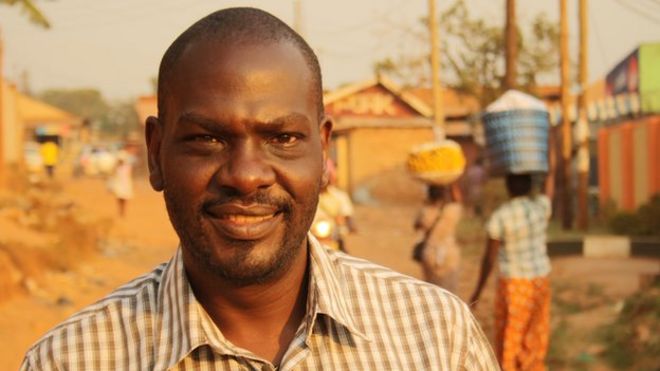
In Uganda few people are willing to talk about mental illness. Those who suffer are frequently isolated, shunned by their community and rejected by their families. Our World meets a man who has broken the silence.

Wednesday, 22 June 2016

Breaking the stigma around mental illness in Uganda

A very good report from the BBC about the work of one man


Mental Health in Uganda

Uganda "Stop the Abuse"People with mental health issues from Uganda call for an end to abuse by police, traditional healers, in healthcare and in their families.

Mental Disabilities and Mental Health in Uganda

Everyone is equal before the law regardless of their disability. People with mental disabilities in Uganda are handicapped by outmoded and derogatory language used by the legal system, inaccessible courts and inappropriate accommodation. People with mental disabilities are often seen as subhuman and are not given their rights.

An article by MDAC the Mental Disability Advocacy Centre identifies the following problems:
  • The use of outdated and discriminatory terminology such as "idiot", "persons of unsound mind" and "lunatic" in court papers and processes which entrench stigma;
  • People with intellectual or psycho-social disabilities are legally denied the right to bring or defend cases and their evidence is deemed to lack credibility or refused;
  • Some people with disabilities cannot navigate or understand the complex processes required to initiate or defend cases, and no support is provided to them to do so;
  • Rigid application of rules of procedure in a way which is likely to deny substantive access to justice;
  • Imposition of court fees discourages or prohibits people from claiming their rights through the courts;
  • People with disabilities have their cases taken over by guardians ad litem or other substitute decision-makers, without the need for their consent; and
  • People with disabilities are arbitrarily detained during criminal procedures, sometimes left to languish for decades in detention (See UGANDA: ACCESS TO COURTS FOR PEOPLE WITH MENTAL DISABILITIES).
"They don't consider me as a person"
Uganda is a country with a population of 35 million and only 30 psychiatrists. Lack of access to treatment, poverty, stigma, discrimination and human rights abuses are major barriers for the rehabilitation of people with mental disorders. Many workers in Uganda do not want to work in psychiatry due to the stigma associated with mental illness.

The organisation BasicNeeds has been working in Uganda for over 10 years to improve the quality of life of people living with mental illnesses. Their work involves supporting access to quality community mental health services and getting people back to productive work. They target 2 types of vulnerable groups.
The first are people who suffer from a mental disorder (schizophrenia, bipolar affective disorder, clinical depression, anxiety disorders etc) and the second, people who are likely to suffer from mental disorders as a result of the context they are living in (high risk categories include poor households, people directly affected by protracted conflict, included orphaned youth and former child soldiers, women and girls living in poverty, people with disabilities living in poverty). Significant effort has also gone into post-conflict programmes addressing psychosocial trauma and related deprivation and poverty in Northern Uganda, (see BasicNeeds: Where we work).
A summary of article 13 of the United Nations Convention on the Rights of PWDs says: "People with disabilities have the right to effective access to justice on an equal basis with others, including through the provision of appropriate accommodations."

A World Health Organisation (2001) report says that one in four people are expected to get some kind of mental health disorder in their lifetime isn't it time we removed the stigma.